
A student pilot endorsement is a formal logbook entry signed by a certified flight instructor (CFI) certifying that the student has met specific regulatory requirements to exercise a defined flight privilege. Without this signed certification, a student pilot cannot legally fly solo, conduct cross-country flights, or advance through key training milestones. The FAA standardizes endorsement language through Advisory Circular 61-65K, which contains 96 sample endorsement templates. Understanding what does endorsement mean for a student pilot is the first step to managing your training progress and staying legally current.
Student pilots collect several distinct endorsements throughout training, each tied to a specific milestone under 14 CFR Part 61. Knowing which endorsement you need, and when it expires, keeps your training on track and prevents legal violations.
This endorsement confirms you passed an oral or written knowledge test on topics like airspace, weather, and aircraft systems. Your instructor signs it after reviewing your understanding of the rules that govern solo flight. The pre-solo knowledge endorsement does not expire. Once signed, it remains valid for the duration of your student pilot training.
This is the endorsement most students encounter first as a time-sensitive requirement. Your CFI signs it after observing you demonstrate safe flight proficiency in a specific aircraft make and model. The flight proficiency endorsement expires every 90 days under 14 CFR 61.87(b). That 90-day clock means you must fly consistently or schedule a review flight with your instructor before the deadline.
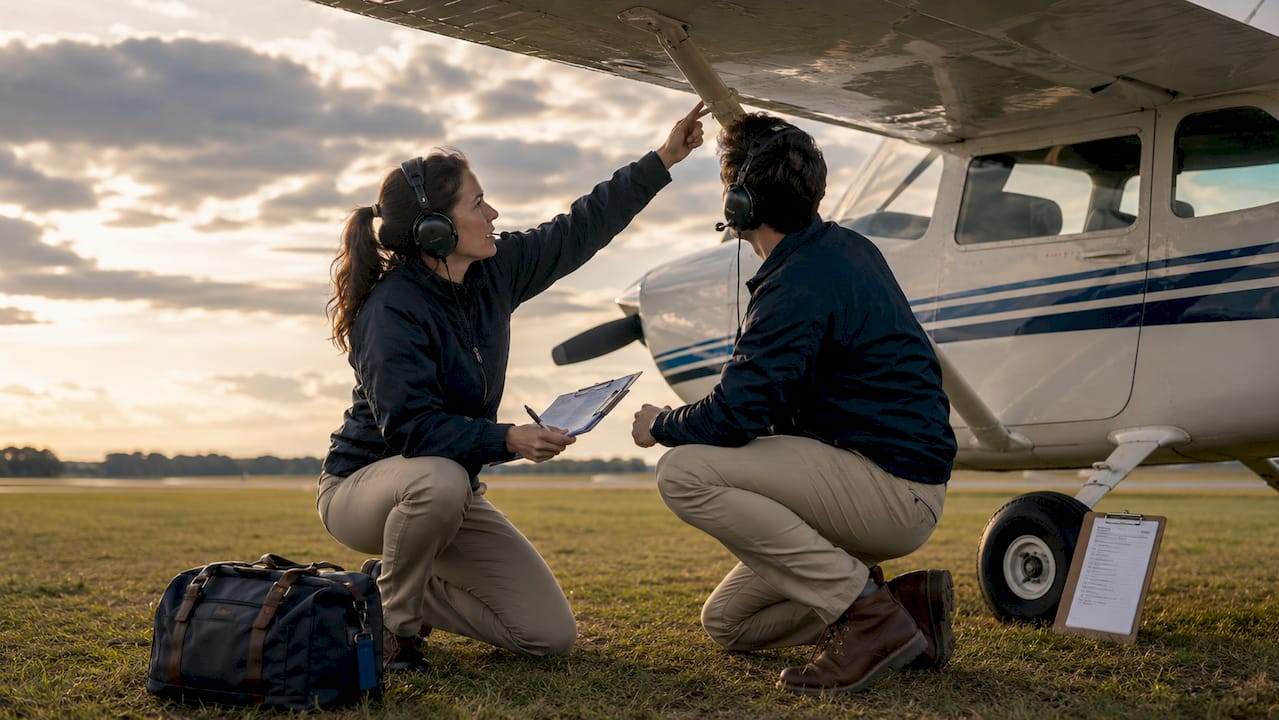
Before your first solo, your CFI adds a specific endorsement authorizing that single flight event. This endorsement is also aircraft-specific and carries an expiration date. If the date passes before you fly, your instructor must re-evaluate and re-sign before you can legally take the controls alone.
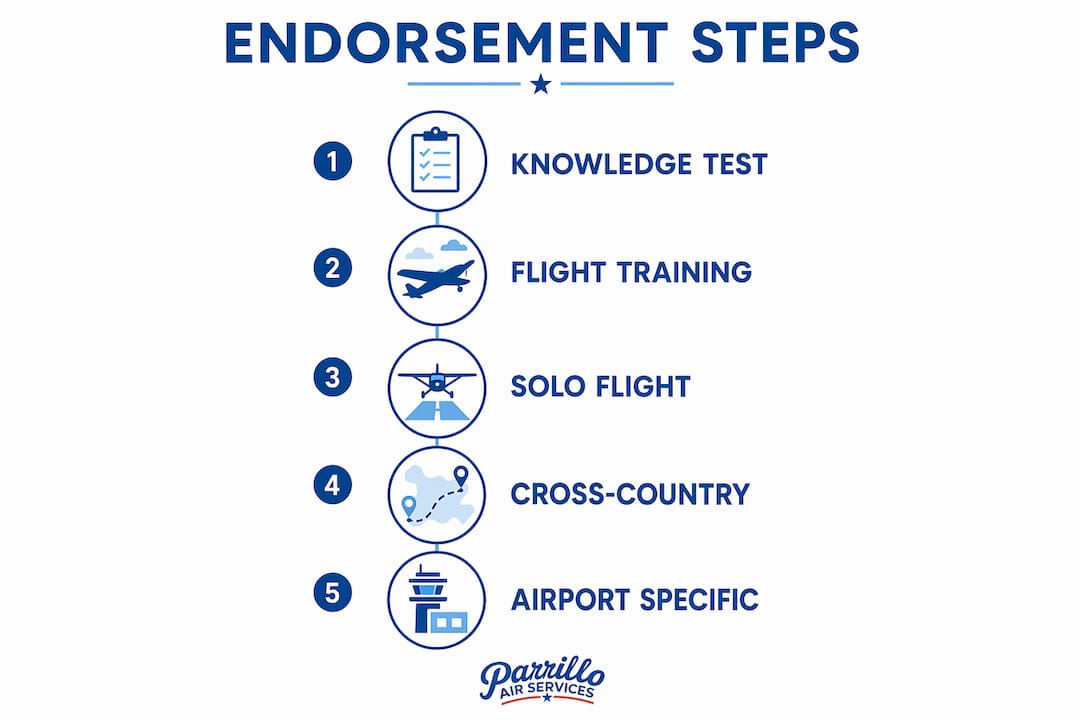
Cross-country solo flights require a separate endorsement that is specific to the planned route and date. The A.10 endorsement template covers specific solo cross-country flights and is valid only on the date listed. Flights to airports beyond 25 nautical miles from your home base also require a dedicated endorsement after documented training on that route, weather, and alternates.
Pro Tip: Keep a simple spreadsheet or notes app entry tracking each endorsement's date and expiration. Missing a 90-day renewal is one of the most common reasons students face unexpected delays before a solo flight.
Your logbook is the official legal record for all endorsements under 14 CFR 61.189. The FAA treats each signed entry as a binding certification, not a suggestion or a formality.
An endorsement is a legal certification under 14 CFR 61.59. If an incident occurs during a solo flight, investigators review the endorsement to confirm the instructor verified the student's readiness. A missing, expired, or improperly worded endorsement can expose both the student and the instructor to serious regulatory consequences.
The legal weight of an endorsement falls directly on the instructor who signs it. That responsibility shapes how CFIs approach the endorsement process.
Endorsements are not transferable between instructors without new verification. If you switch CFIs mid-training, your new instructor must independently assess your proficiency before signing any flight endorsement. The aeronautical knowledge endorsement carries forward in your logbook, but your new CFI must review and acknowledge it before you exercise solo privileges under their supervision.
Signing an endorsement is one of the most serious acts a flight instructor performs. Rushing that process weakens safety and breaches professional responsibility.
Endorsements are aircraft-specific because different airplanes handle differently, and your proficiency in one does not automatically transfer to another. The FAA requires that solo endorsements name the specific make and model of the aircraft you are authorized to fly alone.
| Endorsement type | Aircraft specificity | Geographic scope | Expiration |
|---|---|---|---|
| Pre-solo knowledge | None required | Unrestricted | None |
| Pre-solo flight proficiency | Make and model required | Training area | 90 days |
| First solo | Make and model required | Designated area | Set date |
| Solo cross-country | Make and model required | Specific route | Flight date only |
| Airport-specific solo | Make and model required | Named airport | Varies |
A student endorsed to solo a Cessna 172 is not legally authorized to solo a Piper Cherokee without a new endorsement. Within a model series, such as the Cessna 172R and 172S, an instructor may cover both variants in a single endorsement if the differences are minor and documented. That judgment call belongs to the CFI, not the student.
Geographic restrictions work the same way. Your training area endorsement covers a defined radius around your home airport. Flying beyond that boundary, or landing at a specific unfamiliar airport, requires additional training and a separate endorsement. Instructors often add stricter limits beyond FAA minimums, such as crosswind maximums or minimum visibility requirements. Those instructor-imposed restrictions carry the same legal force as the FAA's own rules and affect both insurance coverage and instructor liability.
Tracking your endorsements is your responsibility as a student pilot. Your CFI signs them, but you own the logbook and must know what is current.
The pilot training stages checklist at Parrillo Air Services maps each endorsement to the corresponding training milestone, which makes it easier to see what you need and when. Using a structured checklist prevents the gaps that catch students off guard before a checkride.
Pro Tip: Photograph every endorsement page in your logbook and store the images in cloud storage. If your logbook is lost or damaged, those photos serve as evidence of your endorsement history during FAA inquiries or checkride preparation.
The FAA student pilot certificate process and the endorsement process run in parallel. Getting your certificate early gives your CFI the legal framework to begin signing endorsements as you reach each training milestone.
A student pilot endorsement is a legally binding logbook certification that grants specific flight privileges, and managing expiration dates and aircraft specificity is the student's direct responsibility.
| Point | Details |
|---|---|
| Endorsement definition | A CFI's signed logbook entry certifying a student meets FAA requirements for a specific flight privilege. |
| 90-day expiration rule | Flight proficiency endorsements expire every 90 days and must be renewed before solo privileges can continue. |
| Aircraft specificity | Each endorsement names the exact make and model; switching aircraft requires a new endorsement from your CFI. |
| Instructor change protocol | A new CFI must independently verify proficiency before signing any endorsement, even if a prior one exists. |
| Cross-country endorsements | Route-specific solo cross-country endorsements are valid only on the date listed and for the planned route. |
Student pilots often treat endorsements as paperwork to collect on the way to solo flight. That framing gets the relationship backward. An endorsement is your instructor's professional reputation and legal liability on the line, written in ink in your logbook.
I have seen students frustrated when a CFI declines to sign a flight proficiency endorsement after a rough training session. The student feels ready. The instructor disagrees. That disagreement is the system working exactly as designed. The FAA built the endorsement process around instructor judgment, not student confidence.
The most common misconception I encounter is that endorsements transfer automatically when a student switches instructors. They do not. A new CFI who signs a flight endorsement without personally evaluating the student is taking on legal liability for someone else's assessment. No responsible instructor does that without a checkout flight.
The practical advice I give every student is this: treat your endorsement dates the way you treat your medical certificate. Know when each one expires. Build renewal flights into your schedule before the deadline, not after. Proactive communication with your CFI about upcoming expirations is a sign of a serious pilot, and instructors notice.
The endorsement process is not bureaucratic friction. It is the mechanism that keeps untrained pilots out of solo aircraft. Respecting it is part of becoming the kind of pilot who earns a career in aviation.
— Gm
Student pilots who train without a clear endorsement roadmap often hit avoidable delays before their first solo or cross-country flight.

Parrillo Air Services, located in Lynchburg, VA, structures its FAA Part 61 training programs around each endorsement milestone from pre-solo knowledge through cross-country authorization. Every student works with a dedicated CFI who tracks endorsement currency alongside flight hours, so nothing expires without warning. The school's personalized approach means your instructor knows your proficiency level and signs endorsements based on real readiness, not a fixed schedule. Contact Parrillo Air Services to learn how the program keeps your training compliant and your certification progress moving forward.
Get in Touch Today